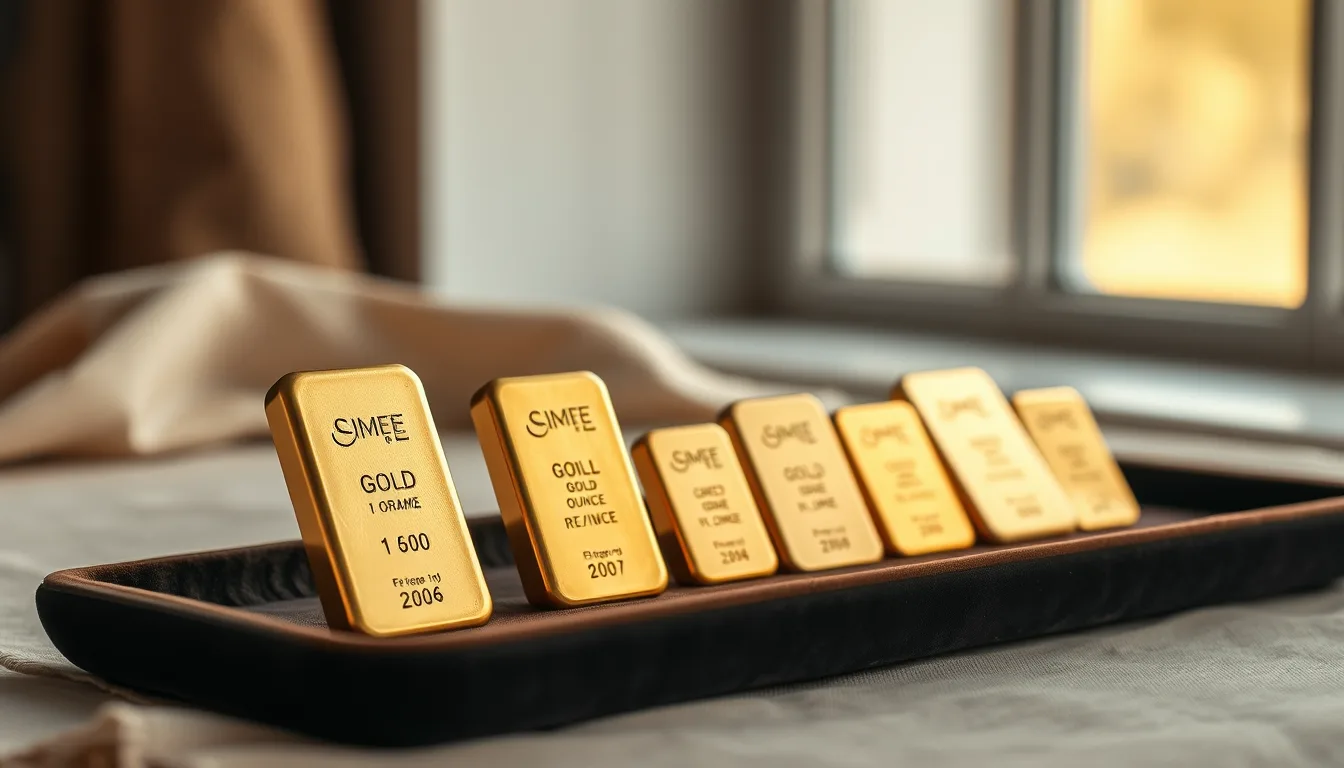
For most Americans, the best places to buy gold bars are large online bullion dealers and reputable local coin shops, with Costco an option for members buying 1 oz bars. Most US banks don't sell gold bars, and the US Mint sells coins, not bars.
Buying a gold bar comes down to three questions. Where can you get a genuine bar? What will you pay above the gold price? And what can you sell it back for later?
The gold price you see quoted, currently $4,194.40 per troy ounce on our live gold price page, is the "spot" price. No seller will hand you a bar for spot. Every seller adds a premium to cover fabrication, shipping, insurance and profit. Where you buy, what size you buy and how you pay all change that premium.
The main places to buy gold bars in the US
| Where | What they sell | Typical premium on a 1 oz bar | Pros | Cons |
|---|---|---|---|---|
| Large online bullion dealers | Bars from 1 gram to 1 kilo, many refiners | Lowest, often about 2–5% over spot | Wide selection, transparent live pricing, buyback desks | Shipping wait, minimum orders, card fees |
| Local coin and bullion shops | Common sizes, often 1 oz and 10 oz | Moderate, often about 3–7% | Inspect before buying, no shipping, quick resale | Limited stock, prices vary shop to shop |
| Costco (members) | Mainly 1 oz bars from major refiners | Low to moderate, but changes with each batch | Trusted retailer, card rewards may offset cost | Members only, purchase limits, often non-refundable, frequent sellouts |
| Banks | Most US retail banks don't sell bullion | n/a | n/a | Rarely an option in the US |
| US Mint | Bullion and proof coins, no bars | n/a | Government-made coins | Bullion coins sold only through authorized dealers |
| Online marketplaces (eBay, etc.) | Anything, from anyone | All over the map | Occasional deals | Highest risk of fakes and fake assay cards |
| TV and phone sellers | Often collectible coins, some bars | Can be very high | Convenient | High-pressure sales, large hidden markups |
The rest of this guide explains each option and how to check that you're getting a fair deal.
Premiums by bar size
Bar size matters more than any other factor. Making a 1-gram bar costs almost as much as making a 1-ounce bar, so small bars carry much higher markups as a percentage of their gold.
| Bar size | Gold content | Typical premium over spot | Approximate cost example |
|---|---|---|---|
| 1 gram | 1 g | 10–25%+ | about 1.15 × $134.85 at a 15% premium |
| 2.5 grams | 2.5 g | 8–15% | about 2.5 × $134.85 × 1.10 |
| 5 grams | 5 g | 5–10% | about 5 × $134.85 × 1.07 |
| 10 grams | 10 g | 4–7% | about 10 × $134.85 × 1.05 |
| 1 troy ounce | 31.1035 g | 2–5% | about 1.03 × $4,194.40 |
| 10 troy ounces | 311.035 g | 1.5–3% | about 10 × $4,194.40 × 1.02 |
| 1 kilo | 32.15 troy oz | 1–2.5% | about $134,853 × 1.015 |
These ranges are typical for card-free payment at reputable dealers. Premiums widen when demand spikes, for example after a sharp price move, and tighten when the market is quiet.
The trade-off is flexibility. A kilo bar is the cheapest per ounce, but you have to sell the whole bar at once. A stack of 1 oz bars costs a little more per ounce, but you can sell one at a time. For many first-time buyers, the 1 oz bar is a reasonable middle ground. You can see live values for every size on our gold bar value page, and kilo-specific pricing on the 1 kilo gold price page.
Small gram bars make sense as gifts or for very small budgets. Know going in that you may pay 15% or more over melt and get back close to spot when you sell, so the price of gold has to rise a fair amount just for you to break even.
Online bullion dealers
Large online dealers such as APMEX, JM Bullion, Money Metals Exchange and similar companies sell the widest range of bars and usually have the lowest premiums. Prices update with the spot market throughout the day, and your price is locked when you confirm the order.
What to check before you buy:
- The "cash/check/wire" price versus the card price. Many dealers charge about 3–4% more for credit cards and PayPal. On a 1 oz bar, that can be more than the dealer's entire premium.
- Shipping and insurance. Many offer free shipping above a minimum order. Packages should ship fully insured and require a signature.
- Buyback prices. Reputable dealers publish what they'll pay to buy the same bar back. The gap between their sell price and buy price (the "spread") is your true round-trip cost.
- Reviews and history. Look for long operating history, a physical address and a Better Business Bureau record. Avoid sites with no buyback policy or prices well below what major dealers charge.
Payment timing matters too. A wire or check locks your price, but the dealer usually waits for funds to clear before shipping. Expect anywhere from a few days to two weeks.
Local coin and bullion shops
A good local shop lets you see and hold the bar before paying, and you walk out with it. Premiums are usually a bit higher than online, though some shops match online prices, especially for cash.
Tips for buying locally:
- Check today's spot price on your phone before you walk in so you can work out the premium yourself.
- Ask the price per bar and what the shop would pay you for the same bar today. A fair shop will tell you both.
- Call two or three shops for quotes on the exact same product, for example "1 oz PAMP bar in assay card."
- Keep your receipt. It records your cost basis for taxes.
Local shops are also convenient sellers when you exit. Recognized bars from known refiners usually sell back near spot, often 97–100%+ of spot, unlike scrap jewelry.
Costco
Costco sells 1 oz gold bars, typically from well-known refiners such as PAMP Suisse or Rand Refinery, plus some bullion coins, through its website to members. Prices have been competitive, and some buyers use a rewards credit card to offset part of the premium.
The catches: you need a membership, there are per-member purchase limits, items sell out quickly, and precious metals are generally non-refundable. Costco also doesn't buy bars back, so you'll sell to a dealer or shop later. Our Costco gold bar page tracks how its pricing compares with spot.
Banks
In many countries banks sell gold bars over the counter. In the US, this is rare. Most major retail banks don't sell bullion to individuals. A few banks may offer safe-deposit boxes to store bars you buy elsewhere, but that's storage, not sales. If a "bank" offers to sell you gold by phone or email, treat it as a possible scam until you've verified it through the bank's official number.
The US Mint: coins, not bars
The US Mint doesn't make gold bars. It makes gold bullion coins, the American Gold Eagle and American Gold Buffalo, and it doesn't sell those bullion coins directly to the public. They're distributed through a network of authorized purchasers and then to dealers. The Mint's own website sells proof and collector versions, which carry much higher premiums than bullion.
If you like the idea of government-backed gold, bullion coins are a reasonable alternative to bars. They usually cost a little more per ounce than a 1 oz bar but are instantly recognized worldwide. Compare options on our gold coin and bar values page.
Trusted refiners and assay cards
Stick to bars from established refiners, ideally ones on the London Bullion Market Association (LBMA) Good Delivery list or major government mints. Bars from these names are easiest to resell near spot:
- PAMP Suisse (Switzerland)
- Valcambi (Switzerland)
- Argor-Heraeus (Switzerland)
- Metalor (Switzerland)
- Perth Mint (Australia)
- Royal Canadian Mint
- Rand Refinery (South Africa)
- Asahi (US and Japan)
- Sunshine Minting (US)
Assay cards are the sealed plastic cards many small bars come in, showing the weight, purity (usually .9999 fine), serial number and refiner. Keep the card sealed. A bar removed from its card can still be sold, but buyers may test it more carefully or offer slightly less. Some refiners add extra anti-counterfeit features, such as PAMP's Veriscan app and Valcambi's CertiCard.
Remember that assay cards can be faked too. A card proves nothing on its own if you bought it from an unknown seller.
Fraud risks and how to avoid them
Counterfeit gold bars are real and getting better. The common fake is a tungsten core plated in gold, because tungsten weighs almost the same as gold.
Red flags:
- Prices at or below spot. No legitimate seller sells new bars below spot.
- Marketplace and social media sellers with little history, especially for gram bars and "sealed" assay cards.
- Cold calls and TV ads that start with bars but steer you toward "rare" or "semi-numismatic" coins with markups that can be 20–50% or more.
- Pressure to buy through a retirement account with a company you've never researched. Read our gold IRA guide first.
- Payment by gift card, crypto or wire to an individual.
If you buy from someone other than a major dealer, verify the bar: check the weight on an accurate scale, measure the dimensions against the refiner's specs, and have a shop test it with an electronic tester such as a Sigma Metalytics. A magnet test only rules out obvious fakes, because tungsten isn't magnetic either.
Taxes, reporting and storage
- Sales tax: Many states exempt bullion, but some tax it or exempt it only above a dollar threshold. Check your state before buying in person or online.
- Reporting: Businesses that receive more than $10,000 in cash in one transaction, or related transactions, must file IRS Form 8300. Paying by wire or check doesn't trigger that form.
- Taxes on gains: Long-term gains on physical gold are taxed as collectibles at up to 28% federally. Keep every receipt.
- Storage: Options include a home safe (check your homeowner's policy limits), a bank safe-deposit box (usually not insured by the bank) or a third-party depository with insurance.
For a step-by-step walkthrough of your first purchase, see how to buy gold. When it's time to sell, how to sell gold covers getting a fair buyback price.
The bottom line
Buy gold bars from a large online dealer or a reputable local shop, or from Costco if you're a member and stock is available. Choose bars from well-known refiners, and favor 1 oz or larger if keeping premiums low matters most to you. Pay by wire or check to avoid card surcharges, and compare the buy price with the buyback price before you commit. Skip unknown marketplace sellers, cold callers and anything priced below spot. US banks and the US Mint generally aren't places to buy bars.
Sources
Frequently asked questions
Can I buy gold bars at a bank in the US?
Usually not. Most major US retail banks don't sell gold bullion to individuals, though some offer safe-deposit boxes where you can store bars you buy elsewhere.
Does the US Mint sell gold bars?
No. The US Mint makes gold coins such as the American Gold Eagle and Gold Buffalo, and its bullion coins reach the public through authorized dealers rather than directly from the Mint.
How much over spot should I pay for a 1 oz gold bar?
At reputable dealers, a 1 oz bar from a known refiner typically costs about 2–5% over spot when you pay by wire or check, or roughly 1.03 × {{gold_oz}} at a 3% premium. Credit card payment often adds another 3–4%.
Is it cheaper to buy small gold bars or large ones?
Larger bars are cheaper per ounce. A 1-gram bar can carry a 10–25%+ premium, while a 10 oz or kilo bar may cost just 1–3% over spot, but larger bars must be sold all at once.
Are Costco gold bars a good deal?
Costco's 1 oz bars come from major refiners and have often been competitively priced, especially if a rewards card offsets part of the cost. There are purchase limits, sales are generally final, and Costco doesn't buy them back.
How do I know a gold bar isn't fake?
Buy from established dealers, choose bars from known refiners in sealed assay cards, and be wary of prices below spot. For bars from private sellers, check weight and dimensions and have a shop test them electronically.
Get the gold brief
Gold's move and the reason behind it, in your inbox every US trading morning. Free, two minutes to read, unsubscribe anytime.
 AIJake · AI buying & selling guideJake is one of GoldTrack USA's AI writers. Figures are checked automatically against live market data, and sources are listed above. Not financial advice.
