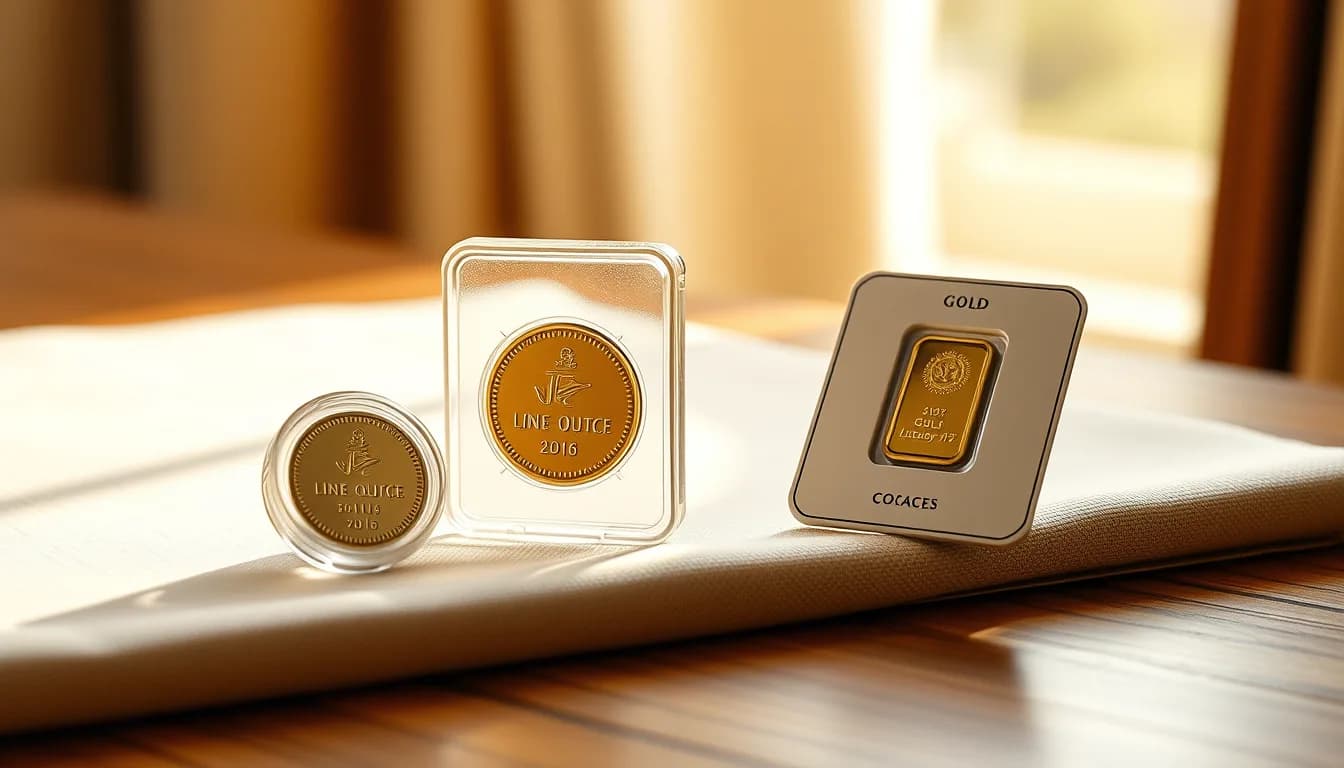
To buy gold, decide whether you want physical metal or a gold ETF. Then buy widely recognized 1 oz coins or bars from a reputable dealer, and compare the total price per ounce (premium over spot plus shipping and payment fees) against the live spot price of {{gold_oz}}.
Buying gold is simple once you know what you're paying for. Every gold product is priced as spot price plus a premium. Spot is the live market price for one troy ounce, currently $4,194.40. The premium is the extra you pay to cover minting, the dealer's margin and shipping. Your main job as a first-time buyer is to keep that premium low and to buy something easy to sell later.
This guide walks through the decisions in order.
Step 1: Decide physical gold or paper gold
There are two broad ways to own gold.
- Physical gold: coins and bars you hold yourself or store in a vault. You own the metal outright, with no company or broker in between. In exchange, you pay premiums, you need storage, and selling takes a little effort.
- Gold investments in a brokerage account: gold ETFs (funds that hold metal in a vault), gold mining stocks, and mining funds. These are cheap to buy and sell instantly. You never hold the metal.
Many people own some of each. The trade-off is direct ownership versus convenience and cost. If you want the brokerage route, skip to the ETF section below.
Step 2: Choose coins or bars
For physical gold, stick to recognized bullion. These are products whose value comes almost entirely from their gold content, so any dealer will buy them back near spot.
| Product | Gold content | Purity | Typical use |
|---|---|---|---|
| American Gold Eagle (1 oz) | 1.0000 troy oz | 22K (91.67%) | Most widely recognized US coin |
| American Gold Buffalo (1 oz) | 1.0000 troy oz | 24K (99.99%) | Pure gold US coin |
| Canadian Gold Maple Leaf (1 oz) | 1.0000 troy oz | 24K (99.99%) | Low-premium, very liquid |
| South African Krugerrand (1 oz) | 1.0000 troy oz | 22K (91.67%) | Often among the cheapest coins |
| 1 oz gold bar (PAMP, Valcambi, etc.) | 1.0000 troy oz | 99.99% | Lowest premium per ounce |
| 10 oz / 1 kilo bars | 10 oz / 32.15 oz | 99.99% | Larger buyers; lowest premiums |
The Eagle and the Krugerrand are 22K. They weigh slightly more than an ounce in total, but they contain a full ounce of gold. A 22K coin is not "less gold" than a 24K one.
Coins vs bars in short:
- Coins cost a bit more. They are government-guaranteed, harder to counterfeit, and easy to sell anywhere.
- Bars have the lowest premium per ounce, especially in larger sizes. Stick to major refiners and keep the assay card or packaging. Big bars (10 oz and up) are harder to sell in pieces.
See live values for each product on our gold coin and bar values page, or check bar prices by size on how much a gold bar is worth.
Avoid as a first purchase: "commemorative" or "limited edition" coins, colorized coins, proof coins sold on TV, and gold-plated items. These carry large markups over their gold content, and dealers usually buy them back near melt value.
Step 3: Understand premiums (and compare them correctly)
Premiums shrink as size goes up. Small pieces cost much more per ounce. Typical ranges at reputable dealers in normal markets look like this. They widen during buying panics.
| Product | Typical premium over spot | Approx. cost per oz at current spot |
|---|---|---|
| 1 kilo bar | 1–2% | $4,194.40 × 1.01–1.02 |
| 1 oz bar (major refiner) | 2–4% | $4,194.40 × 1.02–1.04 |
| 1 oz Maple Leaf / Krugerrand | 3–5% | $4,194.40 × 1.03–1.05 |
| 1 oz American Gold Eagle / Buffalo | 4–7% | $4,194.40 × 1.04–1.07 |
| 1/10 oz coins | 8–15%+ | $4,194.40 × 1.08–1.15+ |
| 1 gram bars | 15–40%+ | $134.85 × 1.15–1.40+ per gram |
| Proof / collector coins | 20–50%+ | Priced on collectibility, not gold |
How to compare offers:
- Add up the total delivered cost: price + shipping + insurance + sales tax + card fees.
- Divide by the ounces of gold you're getting.
- Compare that number to spot ($4,194.40). The percentage above spot is your real premium.
Example: a dealer lists a 1 oz Gold Eagle at 5% over spot. That's about $4,194.40 × 1.05. Add $15 shipping and a 3% credit card surcharge, and your real premium is closer to 8.5%. The same coin paid by bank wire with free shipping might cost about 4–5% over spot.
Also check the buyback price, meaning what the dealer pays today for the same item. The gap between buy and sell prices shows how much gold has to rise before you break even.
Step 4: Pick where to buy
| Where | Pros | Cons |
|---|---|---|
| Large online dealers | Wide selection, competitive prices, posted buyback prices | Shipping wait; best prices require wire or check |
| Local coin/bullion shop | See it before you pay, no shipping, can pay cash, local buyback | Premiums vary widely; shop around |
| Costco | Simple, members only, often priced competitively | Limited products, purchase limits, can't sell back to Costco |
| US Mint | Direct from the source | Sells mostly proof and collector versions at high premiums |
| Banks | Familiar | Most US banks don't sell gold to retail customers |
| TV ads, cold callers | None worth having | Often high-markup collectible coins |
Notes on each:
- Online dealers: Read the order terms. Many quote a "cash/wire" price and a higher card price. Orders lock at the price shown, and canceling can cost you a market-loss fee.
- Coin shops: Call two or three shops and ask for their price on a 1 oz Eagle or Maple Leaf over spot. A good shop will quote a clear number.
- Costco: Sells 1 oz gold bars and some coins online to members. Our Costco gold bar price page tracks how its price compares with spot.
- US Mint: Bullion versions of the Eagle and Buffalo aren't sold to the public directly. They go through authorized dealers. The coins the Mint sells to individuals are mostly proof and uncirculated collector versions, which carry collector premiums.
For the coins themselves, see our live American Gold Eagle value page.
Step 5: Pay the smart way
- Wire transfer, ACH or check: usually the cheapest. Checks may delay shipping until they clear.
- Credit card or PayPal: typically 3–4% more, because the dealer passes on the fee. Card rewards rarely cover that.
- Cash (in person): fine at local shops. Dealers must file IRS Form 8300 for cash payments over $10,000. This is a routine reporting form, not a problem. Splitting purchases to avoid it is illegal ("structuring").
- Sales tax: many states exempt bullion, some tax it, and some exempt it only above a dollar threshold. Check your state before ordering.
Step 6: Store it safely
| Option | Typical cost | Trade-offs |
|---|---|---|
| Home safe | One-time cost of the safe | Instant access; theft risk; standard homeowner's policies often cap coverage for precious metals |
| Bank safe deposit box | Annual box rental | Secure; contents aren't FDIC-insured; access only during bank hours |
| Third-party depository | Roughly 0.1–0.5% of value per year | Insured and audited; ongoing fee; less immediate access |
Whatever you choose:
- Keep coins in their original tubes or capsules and bars in their assay cards.
- Avoid handling them with bare hands.
- Keep purchase receipts. You'll need your cost basis for taxes when you sell.
Alternatives: gold ETFs, stocks and IRAs
Gold ETFs hold physical gold in vaults and trade like stocks. Annual expense ratios on the largest US gold ETFs run roughly 0.10% to 0.40%. There are no premiums, no storage hassles, and you can buy a fraction of an ounce's worth. The trade-off: you own fund shares, not metal you can hold.
Gold mining stocks and funds are businesses. Their prices often swing more than gold itself, in both directions, and depend on costs, management and debt. They can also pay dividends. Our gold stocks explainer compares miners, ETFs and physical metal side by side.
Gold IRAs let you hold approved coins and bars in a self-directed retirement account. The rules are strict:
- The metal must meet purity standards (Eagles are a named exception).
- It must be held by an IRS-approved custodian, not at home.
- Fees are higher than a regular IRA.
Beware of companies pushing "home storage IRAs" or high-markup coins. Read our Gold IRA guide before signing anything.
Taxes: long-term gains on physical gold, and on ETFs that hold metal, are taxed as collectibles at up to 28% federally. That's higher than the rate on most stocks held long-term. Mining stocks are taxed like ordinary stocks.
Mistakes first-time buyers make
- Buying collectible or "limited mintage" coins from TV, radio or cold callers at 30–100% over melt value.
- Buying tiny pieces. A stack of 1 gram bars can cost far more per ounce than a single 1 oz coin.
- Ignoring the buyback spread. A low price means little if the dealer pays far below spot when you sell.
- Paying by card without noticing the surcharge.
- Buying on unverified marketplaces. Counterfeits of popular coins and bars exist. Stick to established dealers.
- Chasing headlines. Gold can drop meaningfully. It recently traded well below its 52-week high. Decide on an amount you're comfortable holding through swings rather than reacting to daily moves (see our gold price today page for context).
- Not keeping receipts, which makes tax reporting harder later.
- Confusing jewelry with investment gold. Jewelry carries big retail markups, and when sold it typically fetches 70–85% of melt value at a jeweler, or less at a pawn shop. Recognized bullion sells back near spot, often 97–100%+.
When it's eventually time to sell, our how to sell gold guide covers getting a fair price.
A simple first purchase checklist
- Check the live spot price ($4,194.40 per oz).
- Choose a recognized 1 oz coin or bar unless your budget calls for smaller.
- Get quotes from at least two online dealers and one local shop.
- Compare total delivered cost per ounce, including shipping, tax and payment fees.
- Check each dealer's buyback price for the same item.
- Pay by wire or check if possible.
- Plan storage before the package arrives.
- File your receipt.
The bottom line
Buying gold well comes down to three things:
- Buy recognized bullion. 1 oz Eagles, Maple Leafs, Krugerrands, Buffalos or major-refiner bars.
- Compare total cost per ounce against spot. Include shipping, tax and payment fees.
- Choose a dealer with a fair buyback price.
If you'd rather skip premiums and storage, a gold ETF gives you price exposure without the metal. Whichever route you take, remember that gains are taxed as collectibles at up to 28%, and that gold's price can fall as well as rise.
Sources
Frequently asked questions
What is the cheapest way to buy gold?
Per ounce, larger bars from major refiners paid by bank wire usually carry the lowest premiums, often 1–4% over spot. A gold ETF avoids premiums entirely but charges a small annual expense ratio.
Is it better to buy gold coins or bars?
Bars usually cost less over spot, while coins like the American Gold Eagle are government-guaranteed and easier to sell anywhere. Both sell back near spot if they're recognized bullion products.
Can I buy gold at my bank?
Most US banks don't sell gold coins or bars to retail customers. Most people buy from online bullion dealers, local coin shops, or Costco if they're members.
How much does a 1 oz gold coin cost right now?
Spot gold is {{gold_oz}} per ounce, and popular 1 oz coins typically sell for about 3–7% above that. That puts a 1 oz Eagle at roughly {{gold_oz}} × 1.04–1.07 before shipping and fees.
Do I pay taxes when I buy gold?
Some states charge sales tax on bullion and many exempt it, so check your state's rules. When you sell, long-term gains on physical gold are taxed as collectibles at up to 28% federally.
Can I put physical gold in an IRA?
Yes, through a self-directed gold IRA. The metal must meet IRS purity rules and be held by an approved custodian, not stored at home.
Get the gold brief
Gold's move and the reason behind it, in your inbox every US trading morning. Free, two minutes to read, unsubscribe anytime.
 AIJake · AI buying & selling guideJake is one of GoldTrack USA's AI writers. Figures are checked automatically against live market data, and sources are listed above. Not financial advice.
