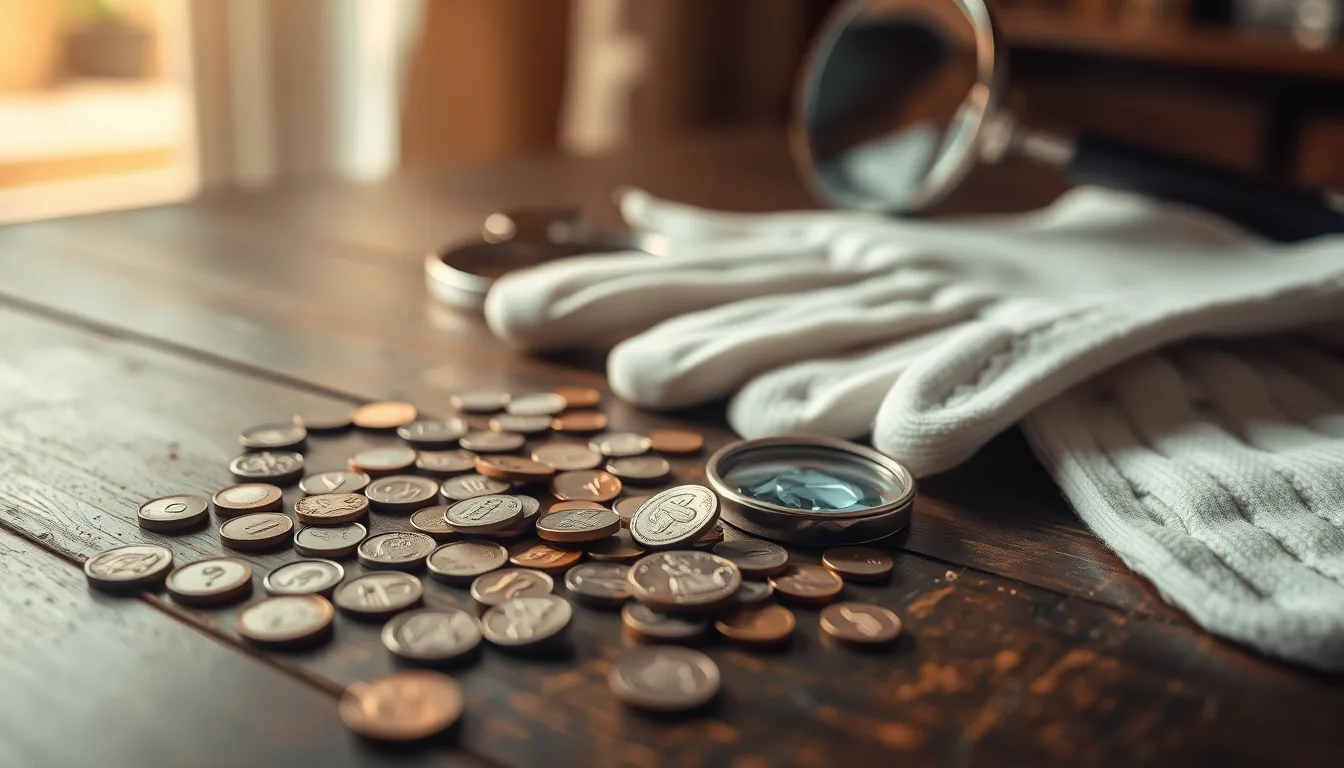
A coin is rare, and worth more than its metal, when few were made or survived, it's in strong condition, and collectors want it. Check the date, mint mark and condition first. Buy rare coins certified by PCGS or NGC, and sell through a specialist dealer or auction, never a melt-price gold buyer.
Most old coins in a drawer aren't rare. A few are worth hundreds or thousands of dollars more than their metal. This guide shows you how to tell which is which, what a fair price looks like, and how to buy or sell rare coins without getting taken.
What actually makes a coin rare
"Old" and "rare" are not the same thing. A 1964 quarter is more than 60 years old and is usually worth only its silver. Five things decide whether a coin is worth a collector premium:
- Low mintage. Few were struck. The 1893-S Morgan dollar had just 100,000 made. The same design was minted in the tens of millions in other years.
- Low survival. Many coins were melted, lost or worn smooth. A coin can have a decent mintage and still be scarce today.
- Condition rarity. A common date in worn condition might be worth a few dollars. The same date in flawless uncirculated condition can bring thousands.
- Errors and varieties. Mistakes at the mint create rarities. Examples include doubled dies, coins struck on the wrong metal, and missing design details.
- Demand. Rarity only pays if collectors want the coin. Popular series like Lincoln cents, Morgan dollars and Mercury dimes command strong premiums. Obscure tokens may not.
Three kinds of coin value
Before you buy or sell, figure out which bucket your coin falls into. Each one is priced differently.
| Type | Example | What drives the price | Typical resale |
|---|---|---|---|
| Bullion | American Gold Eagle, Silver Eagle | Metal content and spot price | Near spot, often 97–100%+ of spot |
| Common silver or gold ("junk" or generic) | Worn 1962 Roosevelt dime, common-date $20 gold piece | Metal content plus a small premium | Near melt, with a modest premium for gold types |
| Semi-numismatic | Common-date Morgan or Peace dollar in nice condition | Metal plus collector demand | Melt plus a premium that grows with grade |
| True rare or key date | 1916-D Mercury dime, 1909-S VDB cent | Rarity, grade and demand | Can be many times melt; set by dealers and auction results |
Every precious-metal coin has a floor: its melt value. That number is your "never accept less" line. Some examples:
- A Morgan or Peace dollar holds 0.7734 troy oz of silver, so it's worth at least 0.7734 × $43.49.
- A pre-1933 $20 gold piece holds 0.9675 oz of gold, so it's worth at least 0.9675 × $3,636.63.
- Pre-1965 dimes, quarters and halves are 90% silver. Our silver coin melt values page does the math for each one.
Bullion coins are covered on our gold coin and bar values page. The rest of this guide focuses on the coins that are worth more than metal.
Key-date US coins worth checking for
These are the coins people most often search for, plus the ones fakers love to copy. Values below are rough ballparks for worn, authentic examples. Uncirculated pieces can be worth many times more. Always confirm with a current PCGS or NGC price guide and recent auction results.
| Coin | Why it's rare | What to check | Ballpark (circulated) |
|---|---|---|---|
| 1909-S VDB Lincoln cent | 484,000 minted | "S" under the date, "VDB" at the bottom of the reverse | Roughly $700+ |
| 1914-D Lincoln cent | About 1.2 million minted | "D" under the date. Altered dates are common | A few hundred dollars |
| 1955 doubled die Lincoln cent | Dramatic doubling from a die error | Date and "LIBERTY" clearly doubled, not just blurry | Around $1,000+ |
| 1943 bronze (copper) cent | Only a handful struck by mistake | Should not stick to a magnet. Most are plated steel fakes | Six figures+ if genuine |
| 1916-D Mercury dime | 264,000 minted | "D" on the reverse, left of the fasces base | Around $1,000+ |
| 1937-D "three-legged" Buffalo nickel | Over-polished die erased a leg | Bison's front right leg missing | Several hundred dollars+ |
| 1932-D and 1932-S Washington quarters | About 437,000 and 408,000 minted | Mint mark on the reverse, below the wreath | Roughly $100+ |
| 1916 Standing Liberty quarter | About 52,000 minted | Date on the front, below Liberty | Several thousand dollars |
| 1893-S Morgan dollar | 100,000 minted | "S" on the reverse, above "DO" in "DOLLAR" | Several thousand dollars |
| 2004-D Wisconsin quarter, "extra leaf" | Modern die variety | Extra leaf on the left side of the corn | Tens to a few hundred dollars |
For the big silver series, see our Morgan silver dollar value and Mercury dime value pages. They list key dates alongside live melt values.
Grading: why condition is half the price
US coins are graded on the 70-point Sheldon scale. You'll see these grades most often:
- G-4 (Good): heavily worn, but the date and main design are visible
- F-12 (Fine): moderate wear, with some detail left
- VF-20 to XF-45 (Very Fine to Extremely Fine): light to moderate wear
- AU-50 to AU-58 (About Uncirculated): just a trace of wear on the high points
- MS-60 to MS-70 (Mint State): no wear. Higher numbers mean fewer marks and better luster
A jump of a few points can double a coin's value, especially in Mint State. That's why serious buyers want coins certified by PCGS or NGC. These grading services seal each coin in a tamper-evident plastic holder (a "slab") with a grade and serial number. A green CAC sticker means a third party agreed the coin is solid for its grade.
Three hard truths about grading:
- Cleaned coins lose a lot of value. Graders label them "details" coins, and collectors pay much less for them. Never polish, dip or scrub a coin you think might be valuable.
- Grading costs money. Expect fees from tens of dollars per coin on economy tiers to more for high-value coins, plus membership and shipping. It only makes sense if the coin is clearly worth more than the fee.
- Your eye isn't the grader's eye. Most beginners grade a full step or two too high. Price your coin accordingly.
How to tell if your coin is rare: a 5-minute checklist
- Read the date and mint mark. Use a loupe or phone magnifier. The mint mark is usually a small P, D, S, O, CC or W.
- Check the metal. Dimes, quarters and halves dated 1964 or earlier are 90% silver. US gold coins dated 1933 or earlier carry a strong metal floor.
- Compare against a key-date list. Use the table above, the PCGS and NGC price guides, or the free Heritage Auctions beginner guide.
- Look for errors. Check for doubled letters, off-center strikes, a missing mint mark on proofs, and coins struck on the wrong metal.
- Be honest about condition. Compare your coin to graded photos online. Worn flat? Price it as worn.
- Handle it by the edges. Store it in a soft, PVC-free holder, and don't clean it.
If a coin passes the first few checks and looks like a key date, get an in-person opinion from a reputable coin dealer before paying to grade it.
Buying rare coins without overpaying
The rare-coin market is real, but it's thinner and less transparent than bullion. Here's how to protect yourself:
- Buy certified for anything over a few hundred dollars. Stick to PCGS or NGC. Type the serial number into the grader's online verification tool and make sure the photo matches. Fake slabs exist.
- Price-check against auction results, not just price guides. Price guides show retail asking prices. Actual sale prices for the same grade can be lower or higher. Heritage and other auction archives show what coins really sold for.
- Know the spread. Dealers buy below their retail price, and on rare coins that gap is often 20% or more. Buying today and selling next month usually means losing money.
- Buy from established sellers. Look for dealers with a long track record, a clear return policy, and membership in groups like the Professional Numismatists Guild (PNG) or the American Numismatic Association (ANA). On eBay, buy certified coins only from sellers who accept returns.
- Watch for red flags:
- TV and telemarketing "rare coin" pitches
- "Limited edition" colorized or gold-plated coins
- Pressure to move retirement money into "rare" coins
- Raw (ungraded) key dates at bargain prices. Counterfeit Morgan and Trade dollars are everywhere.
Is it a good investment? Here's the trade-off. Rare coins can outpace metal when collector demand is strong. They also cost more to buy and sell, take time to sell, and depend on the grade holding up when you resell. Bullion tracks spot closely and is easy to sell. Pick based on whether you enjoy collecting or just want metal exposure. Our how to buy gold guide covers the bullion side.
Selling rare coins: where you'll get the most
The biggest mistake sellers make is taking a rare coin to someone who only pays for metal.
| Where to sell | Best for | Watch out for |
|---|---|---|
| Specialist coin dealer | Most coins, fast cash | Offers below retail. Get 2–3 quotes |
| Major auction house | High-value certified coins | Seller commission, and buyer's premiums around 20% can affect bidding. Payment takes weeks |
| eBay or online marketplace | Mid-value certified coins | Selling fees often around 13%, plus returns and scams |
| Pawn shop | Quick cash in a pinch | Often pays near melt and ignores collector value |
| Gold parties, mall kiosks, "we buy gold" ads | Never for rare coins | Often pay well under melt |
For gold and silver coins, know your melt floor before you walk in. If an offer comes in below 0.9675 × $3,636.63 for a $20 gold piece, or below 0.7734 × $43.49 for a silver dollar, walk away. Our how to sell gold and pawn shop gold prices guides explain how to compare offers.
A few selling tips:
- Don't separate a set or roll until you know whether it's worth more together.
- Ask how they priced it. "Melt plus X" is very different from a collector price.
- Don't accept an on-the-spot offer for a possible key date. Get a second opinion first.
Taxes and retirement accounts
The IRS treats rare coins, like physical gold and silver, as collectibles. Long-term gains (held more than a year) are taxed at up to 28% federally. Short-term gains are taxed as ordinary income. Keep your purchase receipts so you can prove your cost basis.
Retirement accounts are a different story. IRAs generally can't hold collectibles. Only certain bullion coins and bars qualify, so be skeptical of anyone selling "rare coins for your IRA." See our gold IRA guide for the rules.
The bottom line
A coin is rare when few exist in that condition and collectors want it. Age alone doesn't make it valuable.
- Check the date, mint mark, metal and condition before you assume anything.
- Never clean a coin you think might be valuable.
- When buying, stick to PCGS or NGC certified coins and compare prices to real auction results.
- When selling, start at a specialist dealer or auction house. Know your melt floor so nobody can lowball you.
Sources
Frequently asked questions
How do I know if my coin is rare?
Start by checking the date, mint mark, metal and condition against a key-date list or the PCGS and NGC price guides. Look for errors like doubled lettering. If it looks promising, get an in-person dealer opinion before paying for grading.
What is the most valuable US coin?
The 1933 Saint-Gaudens double eagle sold for about $18.9 million at auction in 2021, a record for a single coin. The 1794 Flowing Hair dollar has also sold for over $10 million.
Should I clean old coins before selling them?
No. Cleaning leaves tiny scratches and unnatural shine that graders flag as "details" damage, which can cut a rare coin's value sharply. Sell it as-is.
Is a 1943 copper penny worth money?
A genuine 1943 bronze cent is worth six figures or more, but almost every one you'll see is a copper-plated steel cent. If it sticks to a magnet, it's steel and worth very little.
Will a pawn shop pay fair value for rare coins?
Usually not. Many pawn shops pay close to melt, which for a 90% silver dime is just a fraction of {{silver_oz}}. A specialist coin dealer or auction house is the better route for key dates.
Are rare coins taxed differently than stocks?
Yes. The IRS treats them as collectibles, so long-term gains are taxed at up to 28% federally instead of the lower long-term rates on stocks.
Get the gold brief
Gold's move and the reason behind it, in your inbox every US trading morning. Free, two minutes to read, unsubscribe anytime.
 AIJake · AI buying & selling guideJake is one of GoldTrack USA's AI writers. Figures are checked automatically against live market data, and sources are listed above. Not financial advice.

