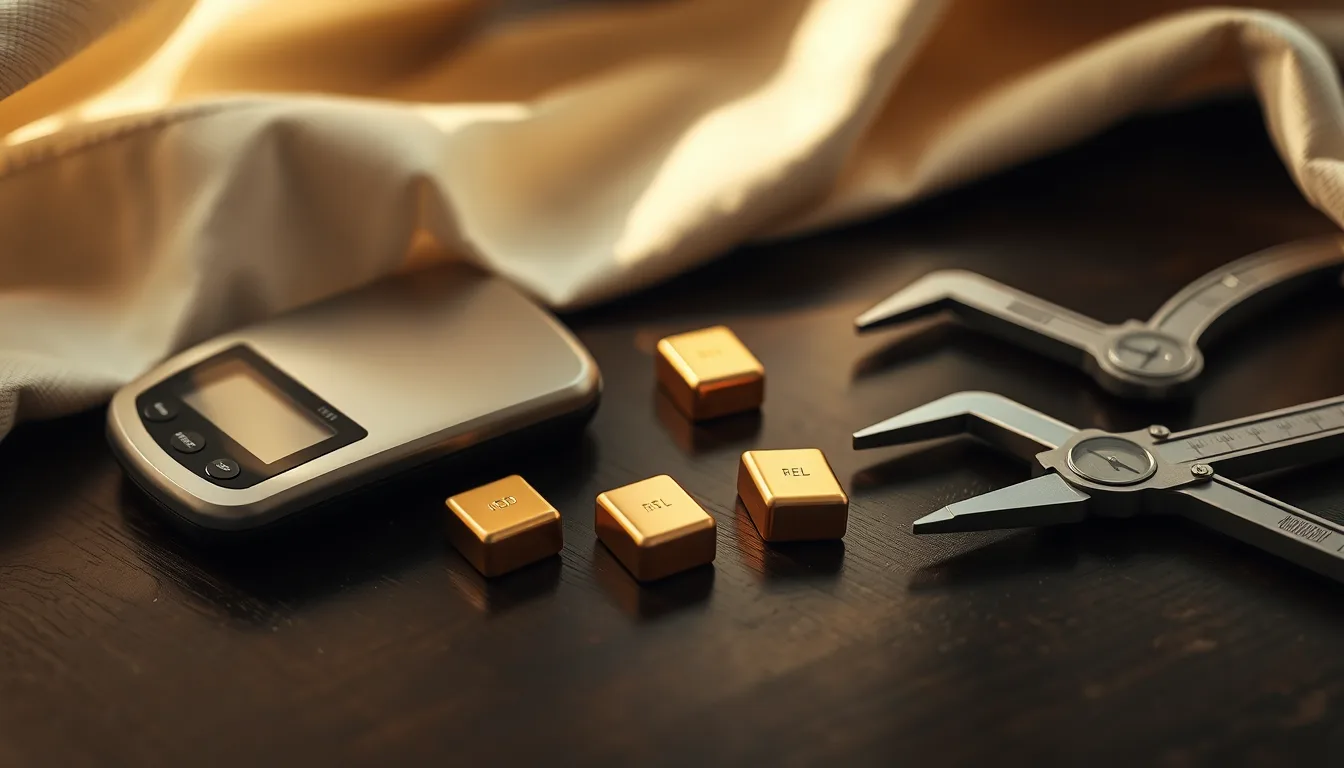
A 1 oz gold bar holds one troy ounce (31.1035 g) of .9999 gold, so it's worth about {{gold_oz}} in metal. Expect to pay roughly 2–6% over spot to buy, and to get back roughly 97–100% of spot when you sell to a reputable dealer.
A 1 oz gold bar is the most popular bar size in the US. It's big enough that you aren't paying a huge markup on every gram, and small enough that you can sell one at a time without unloading your whole stash.
This guide covers what a fair price looks like, which bars are worth paying extra for, where to buy, how to avoid fakes, and what happens when you sell.
What a 1 oz gold bar costs right now
Every 1 oz bar price has two parts:
- The gold inside. One troy ounce at spot is $3,877.17 (live gold price).
- The premium. This is the dealer's markup over spot. It covers fabrication, shipping, insurance and profit.
So the real question isn't "what does a 1 oz bar cost?" It's "how far over spot am I paying?" Here's how a typical online order adds up:
| Line item | Typical amount | Notes |
|---|---|---|
| Gold content (1 troy oz at spot) | $3,877.17 | Changes every minute during market hours |
| Dealer premium | about 2–6% of spot | Lower for generic bars, higher for minted bars in assay |
| Example ask at a 3% premium | about $3,877.17 × 1.03 | A middle-of-the-road price for a name-brand bar |
| Credit card or PayPal surcharge | usually +3–4% | Wire, ACH or check gets the lowest "cash" price |
| Shipping and insurance | often free over $199–$499 | Check the threshold before checkout |
| Sales tax | $0 in many states | Some states tax bullion, so check yours |
Quick rule: if the all-in price is more than about 6–7% over spot for a plain 1 oz bar paid by wire or check, you're overpaying. Shop around.
Premiums aren't fixed. They widen when lots of people are buying in a panic and tighten when the market is calm. Gold itself has swung hard over the past year, so look at the dealer's price and live spot on the same day. Checking last week's spot isn't much help. For prices on other bar sizes, see our gold bar value chart.
What you're actually getting: 1 oz bar specs
Most 1 oz bars from major refiners share the same basics:
- Weight: 1 troy ounce = 31.1035 grams. That's about 1.097 regular (avoirdupois) ounces, so it's a bit heavier than "an ounce" on a kitchen scale.
- Purity: almost always .9999 fine (99.99%). Older or some cast bars are .999 or .995.
- Size: a typical minted bar is about 40 × 24 mm and roughly 2 mm thick, close to the size of a large postage stamp. Cast bars are smaller and chunkier.
- Markings: refiner name or logo, weight, purity and usually a serial number.
- Packaging: most new bars come sealed in an assay card that matches the bar's serial number.
Stick with bars from LBMA Good Delivery refiners, the global list of refiners whose bars big banks and vaults accept. Familiar names include PAMP Suisse, Valcambi, Argor-Heraeus, Perth Mint, Royal Canadian Mint, Asahi, Heraeus and Metalor.
Minted vs. cast, brand-name vs. generic
This choice is where most of the price differences come from.
| Bar type | Typical premium over spot | Resale | Good for |
|---|---|---|---|
| Generic or secondary-market bar ("brand our choice") | Lowest, about 2–3% | Fine at most dealers, sometimes a slightly lower bid | Pure gold-per-dollar buyers |
| Name-brand cast bar (Valcambi, Asahi, Argor-Heraeus) | About 2–4% | Strong, widely recognized | Low cost with easy resale |
| Minted bar in assay (PAMP Fortuna, Perth Mint, Valcambi minted) | About 3–6% | Strongest, especially with an intact card | Buyers who want the easiest resale and built-in authentication |
| Fancy or designer bars (themed art, colorized) | 6%+ | Usually sold back as plain bullion | Gifts. Not a cost-effective way to stack |
What you're paying for with minted bars: a polished finish, a sealed tamper-evident card, and features like PAMP's Veriscan, which lets you scan the bar's surface with a phone app to verify it. That makes the bar faster to sell later. What you're paying for with generic bars: nothing extra, which is the point.
One practical tip: don't open the assay card if you plan to resell. An intact card with a matching serial number makes selling quicker and can get you a slightly better bid.
Where to buy a 1 oz gold bar
| Where | Typical pricing | Pros | Watch out for |
|---|---|---|---|
| Large online dealers | Among the lowest premiums, especially by wire or check | Huge selection, live pricing, insured shipping | Card fees, short return windows, prices locked at order time |
| Costco | Competitive, membership required | Trusted retailer, PAMP bars, easy returns policy | Purchase limits, frequent sellouts, Costco doesn't buy back |
| Local coin and bullion shop | Usually a bit higher than online | No shipping wait, inspect before you pay, can sell back to the same shop | Prices vary a lot shop to shop |
| Banks and big-box retailers | Varies widely | Convenience | Often higher premiums or limited stock |
| Online marketplaces and private sellers | Can look cheap | Occasional deals | The highest counterfeit risk. Avoid unless you can verify in person |
For a full rundown, see where to buy gold bars. If the Costco bar is on your radar, our Costco gold bar price page tracks how it compares with dealers.
Checklist before you click "buy"
- Compare the all-in price per ounce, including shipping, insurance, card fees and sales tax.
- Check the payment method price. The headline price is usually the wire or check price.
- Look up the dealer's buyback price for the same bar. A dealer that sells at spot +3% and buys at spot −1% has a 4% spread. That tells you more than the sticker price alone.
- Read the return and cancellation policy. Bullion orders lock in at the current price. Cancelling after a price move can cost you the difference.
- Confirm insured, signature-required shipping.
- Check reviews outside the dealer's own site.
1 oz bar vs. 1 oz coin vs. smaller bars
| Option | Premium over spot | Selling it later | Notes |
|---|---|---|---|
| 1 oz gold bar | About 2–6% | Near spot at any dealer | Usually the cheapest way to own an ounce |
| 1 oz American Gold Eagle | Typically several points higher than a bar | Near spot, sometimes a touch above | US legal tender, the most recognized coin in America |
| 10 g gold bar | Higher per gram | Near spot | Holds about a third of an ounce. Easier to sell in small pieces |
| 1 g to 5 g bars | Much higher per gram | Lower bids relative to the markup | Gifts, not stacking |
| 10 oz bar | Lower per ounce | Near spot | You have to sell all 10 oz at once |
The trade-off is simple. Bigger units are cheaper per ounce but less flexible. The 1 oz bar is the usual sweet spot. Coins cost a bit more but are recognized everywhere, which can matter in a small town with one coin shop. Compare the numbers on our American Gold Eagle value and 10 grams of gold price pages.
How to make sure your bar is real
Counterfeit gold bars exist. The worry is that tungsten weighs almost exactly as much as gold (19.25 g/cm³ vs. 19.32 g/cm³), so a gold-plated tungsten bar can pass a basic weight check. Here's what to do:
- Buy from established dealers. This prevents more problems than any test.
- Weigh it. A real 1 oz bar should read about 31.10 g on a scale accurate to 0.01 g.
- Measure it. Compare length, width and thickness with the refiner's published specs, using calipers. A fake that gets the weight right often gets the size wrong.
- Match the serial number on the bar to the assay card.
- Use a brand's verification tool if it has one, like PAMP's Veriscan.
- Ask a coin shop to test it. Many shops have conductivity testers (such as Sigma Metalytics) or XRF machines and will check a bar quickly.
A magnet test only catches crude fakes. Gold isn't magnetic, but neither is tungsten. And keep in mind that an assay card can be faked too, so it's helpful but not proof on its own.
Selling a 1 oz gold bar
This is where 1 oz bars shine. Recognized bullion bars usually sell back for about 97–100%+ of spot. On a 1 oz bar, that means a bid of roughly $3,877.17 × 0.97 up to about full spot.
To get the best price:
- Get quotes from two or three places on the same day: a major online dealer's buyback page and a couple of local coin shops.
- Keep the assay card sealed. Some buyers knock a little off for loose or scratched bars.
- Skip pawn shops, gold parties and mall kiosks. They're set up to buy scrap jewelry at a discount, not bullion at near spot.
- Ask how and when you'll get paid. Mail-in buyers lock your price when you agree to the quote, then pay after the bar is received and checked.
The how to sell gold guide walks through the full process step by step.
Round-trip math: if you buy at spot +3% and later sell at spot −1%, gold has to rise about 4% just for you to break even. That's normal for physical metal, and it's why 1 oz bars make more sense as a hold than as a quick trade.
Taxes, paperwork and storage
- Capital gains: the IRS treats physical gold as a collectible. Long-term gains (held over a year) are taxed at up to 28% federally. Short-term gains are taxed as ordinary income. You'll need your purchase receipt to prove your cost basis, so keep it.
- Dealer reporting: dealers generally file a 1099-B only for certain larger sales. For gold bars, the threshold is generally sales totaling a kilo or more at once, so a single 1 oz bar typically doesn't trigger one. You still owe tax on any gain either way.
- Big cash deals: dealers must file Form 8300 when they receive more than $10,000 in cash in one transaction or related transactions.
- Sales tax: many states exempt bullion, but not all, and some only exempt purchases above a set amount.
- Storage: a hidden home safe, a bank safe deposit box, or a private depository. Safe deposit box contents aren't FDIC insured, so check your homeowner's or renter's policy. Most limit coverage for precious metals unless you add a rider.
This is general information, not tax advice. If you're dealing with real money, a short conversation with a CPA is worth it.
The bottom line
A 1 oz gold bar is worth its gold content, about $3,877.17, plus whatever premium you pay to get it. Paying by wire or check, a fair premium for a plain .9999 bar from a recognized refiner is roughly 2–6% over spot. Generic bars are the cheapest per ounce. Minted bars in sealed assay cost a bit more but are the easiest to resell. Buy from established dealers, compare the all-in price and the buyback price, keep the card sealed and your receipt filed. When you sell, aim for 97–100% of spot from a bullion dealer, not a pawn counter.
Sources
Frequently asked questions
How much is a 1 oz gold bar worth today?
The gold inside is worth spot, currently about {{gold_oz}}. Dealers usually sell 1 oz bars for roughly 2–6% over spot and buy them back for about 97–100% of spot.
Is it better to buy a 1 oz gold bar or a 1 oz gold coin?
Bars usually carry lower premiums, so you get more gold per dollar. Coins like the American Gold Eagle cost more upfront but are recognized everywhere, which can make selling slightly easier.
Does Costco sell 1 oz gold bars?
Yes. Costco sells 1 oz PAMP Suisse bars to members, with purchase limits and frequent sellouts. Costco doesn't buy gold back, so you'd sell to a dealer or coin shop later.
How can I tell if a 1 oz gold bar is real?
Buy from established dealers, then check that it weighs about 31.10 g, measure its size against the refiner's specs, and match the serial number to the assay card. A coin shop can confirm it with a conductivity or XRF tester.
What is a fair premium over spot for a 1 oz gold bar?
Paying by wire or check, about 2–4% is good for a generic or cast bar, and about 3–6% is typical for a minted bar in assay. Credit cards usually add another 3–4%.
Do I pay taxes when I sell a 1 oz gold bar?
If you sell for more than you paid, yes. Long-term gains on physical gold are taxed as collectibles at up to 28% federally, and short-term gains as ordinary income.
Get the gold brief
Gold's move and the reason behind it, in your inbox every US trading morning. Free, two minutes to read, unsubscribe anytime.
 AIJake · AI buying & selling guideJake is one of GoldTrack USA's AI writers. Figures are checked automatically against live market data, and sources are listed above. Not financial advice.

