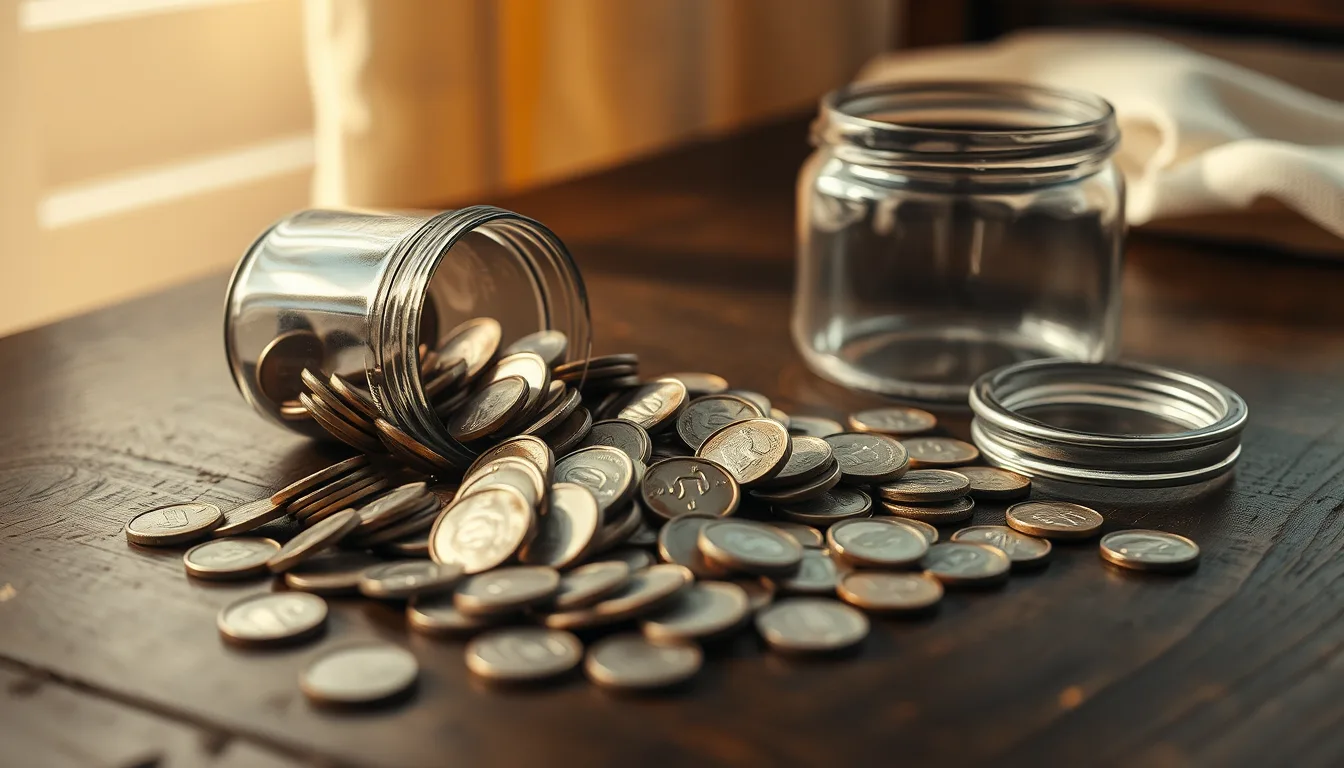
US dimes, quarters and half dollars dated 1964 or earlier are 90% silver and are worth roughly {{junk_silver_dollar}} per $1 of face value at melt. A Morgan or Peace dollar holds 0.7734 oz of silver. Rare dates and coins in top condition can be worth far more than melt, so check yours before you sell.
Most old US silver coins are worth their melt value, which is the silver inside them at today's price. A few are worth much more because collectors want them. The quick version:
- Dimes, quarters and half dollars dated 1964 or earlier are 90% silver. At melt they're worth about $29.70 per $1 of face value.
- Morgan and Peace silver dollars hold 0.7734 oz of pure silver each, so melt is about 0.7734 × $41.54.
- 1965 and later dimes and quarters contain no silver. Kennedy halves from 1965–1970 are 40% silver.
Silver is at $41.54 per troy ounce right now (see the live silver price). Below you'll find the full list, how to do the math, which dates deserve a second look, and what you'll realistically get paid.
Which US coins contain silver (and how much)
The US Mint took silver out of circulating dimes and quarters after 1964, and out of half dollars after 1970. Here's what has silver in it:
| Coin | Years | Silver % | Pure silver per coin | Melt value per coin |
|---|---|---|---|---|
| Dimes (Barber, Mercury, Roosevelt) | 1964 and earlier | 90% | 0.0723 oz | 0.0723 × $41.54 |
| Quarters (Barber, Standing Liberty, Washington) | 1964 and earlier | 90% | 0.1808 oz | 0.1808 × $41.54 |
| Half dollars (Walking Liberty, Franklin, 1964 Kennedy) | 1964 and earlier | 90% | 0.3617 oz | 0.3617 × $41.54 |
| Kennedy half dollars | 1965–1970 | 40% | 0.1479 oz | 0.1479 × $41.54 |
| Morgan dollars | 1878–1904, 1921 | 90% | 0.7734 oz | 0.7734 × $41.54 |
| Peace dollars | 1921–1935 | 90% | 0.7734 oz | 0.7734 × $41.54 |
| Eisenhower dollars (S-mint collector versions only) | 1971–1976 | 40% | 0.3162 oz | 0.3162 × $41.54 |
| Jefferson "war nickels" | mid-1942–1945 | 35% | 0.0563 oz | 0.0563 × $41.54 |
| American Silver Eagle | 1986–today | 99.9% | 1.0 oz | about $41.54 |
A few notes that trip people up:
- Pennies never contained silver. The gray 1943 cent is zinc-coated steel.
- Regular Eisenhower dollars you found in circulation are copper-nickel. Only the S-mint proof and uncirculated versions sold to collectors are 40% silver.
- War nickels have a large P, D or S mint mark above Monticello on the back. Regular nickels have a small mark beside the building or on the front.
- 1976-S Bicentennial quarters, halves and dollars from special collector sets are 40% silver. The ones from your pocket change are not.
If you'd rather plug in numbers than do math, the junk silver calculator handles mixed piles by face value. The silver coin melt values page lists every coin type at the live price.
How to calculate melt value yourself
The formula is simple:
Number of coins × pure silver per coin (oz) × silver spot price = melt value
If you prefer grams, multiply the pure silver in grams by $1.34. One troy ounce is 31.1035 grams.
Worked example: the coffee can from Grandpa's dresser
| What's in the can | Count | Silver each | Total silver |
|---|---|---|---|
| Roosevelt dimes, 1946–1964 | 40 | 0.0723 oz | 2.89 oz |
| Washington quarters, 1932–1964 | 12 | 0.1808 oz | 2.17 oz |
| Kennedy halves, 1965–1969 | 6 | 0.1479 oz | 0.89 oz |
| Morgan dollars (common dates) | 2 | 0.7734 oz | 1.55 oz |
| Total | about 7.5 oz |
Melt value is about 7.5 × $41.54.
There's also a face-value shortcut for 90% coins. Those dimes and quarters add up to $7 in face value, so they're worth roughly 7 × $29.70 at melt. Dealers use this shortcut constantly. You'll hear it as "$1 face" or quotes like "20 times face."
One caveat: worn coins have lost a little silver to decades of handling. That's why the industry figures $1 face of circulated 90% silver at about 0.715 oz instead of the theoretical 0.7234 oz.
Melt value vs. what you'll actually get paid
Melt value is a benchmark, not a guaranteed offer. Here's how the money really moves:
- Common-date 90% "junk" silver (worn dimes, quarters, halves) is usually bought by coin shops at or slightly below melt. They resell it at a premium above melt to buyers who want small, recognizable silver.
- Common Morgan and Peace dollars usually sell for more than melt, even when worn, because people collect them. Dealers commonly price them a few dollars over their silver value. Expect a buy offer near or a bit above melt, not a big premium.
- Silver Eagles and other bullion coins sell back close to spot. Recognized bullion often brings 97–100%+ of spot, depending on the coin and the market.
- 40% coins and war nickels are worth less per coin, so some buyers knock a little more off. The handling cost is the same for less silver.
- Pawn shops and "we buy anything" booths tend to pay the least. They need room to profit, and many don't separate collectible dates from bulk silver.
Silver also moves every day, sometimes by several percent. A quote from Tuesday may not hold on Friday. Check the live price before you walk in, and ask whether an offer is tied to spot at the moment of sale.
When a silver coin is worth more than melt
A small number of coins are worth far more than their silver. Before you sell a pile at melt, spend ten minutes checking dates and mint marks. The mint mark is a small letter: S, D, O, CC, or none for Philadelphia.
| Coin | Dates and varieties to look for | Why it matters |
|---|---|---|
| Morgan dollar | 1893-S, 1889-CC, 1895 (proofs only), any "CC" (Carson City) coin | 1893-S brings thousands of dollars even heavily worn; CC coins carry a premium |
| Peace dollar | 1921 (high relief), 1928, 1934-S | Low mintages |
| Mercury dime | 1916-D, 1921, 1921-D, 1942/1 overdate | A 1916-D can bring roughly $1,000 or more even worn |
| Washington quarter | 1932-D, 1932-S | First-year, low-mintage issues |
| Walking Liberty half | 1916–1921 issues, 1938-D | Scarcer early dates |
| Kennedy half | 1970-D, 1964 "special strike" | 1970-D was only issued in mint sets |
| War nickel | 1943/2-P overdate | Known die variety |
Condition matters too. A common-date Morgan that looks like it just left the Mint, with full luster and no wear on the cheek or hair, can be worth well over melt. Coins already graded and sealed in holders by PCGS or NGC usually sell on their grade, not their silver.
For deeper date-by-date breakdowns, see the guides to Morgan silver dollar value, Mercury dime value, Kennedy half dollar value and war nickel value.
The golden rule: never clean a coin. Polishing, dipping or scrubbing leaves tiny scratches that collectors spot instantly. It can cut a scarce coin's value by half or more. Tarnish is fine; leave it alone.
How to tell if your coin is actually silver
Working through a jar of mixed change? Use this checklist:
- Check the date. Dimes and quarters 1964 or earlier, and halves 1970 or earlier, are your candidates.
- Look at the edge. A copper-colored stripe means clad (no silver). A solid silver-white edge is a good sign.
- Weigh it. A kitchen scale that reads to 0.01 g works. Silver coins are heavier than clad:
- Dime: 2.50 g silver vs. 2.27 g clad
- Quarter: 6.25 g silver vs. 5.67 g clad
- Half dollar: 12.50 g (90%) or 11.50 g (40%) vs. 11.34 g clad
- Listen. Drop a coin gently onto another coin or a hard surface. Silver gives a longer, bell-like ring; clad sounds duller. This is a fun check, not proof.
- Try a magnet. Real silver isn't magnetic. If a "silver dollar" sticks, it's fake.
That last one matters. Fake Morgan dollars, especially fake Carson City coins, are common at flea markets and online. They often come in a little too clean and a little too cheap.
Silver bullion coins: Eagles, Maples and friends
Modern bullion coins are a different animal from old circulating coins. They're made to hold a set amount of silver, usually 1 troy ounce of .999 or .9999 fine silver, and they trade on that metal.
- American Silver Eagle: 1 oz, .999 fine. It's the most widely recognized in the US and typically carries the highest premium when you buy. See the American Silver Eagle value page.
- Canadian Silver Maple Leaf, Austrian Philharmonic, British Britannia: 1 oz each, widely traded, usually a bit cheaper to buy than Eagles.
- Generic rounds from private mints aren't legal tender. They carry the lowest premiums but sometimes get slightly lower buyback offers.
The trade-off: you pay a premium over spot when you buy and get roughly spot when you sell. A coin bought at a fat premium needs silver to rise just to break even. Junk silver often carries a lower buying premium per ounce than Eagles, but it's bulkier and less pure.
How to sell silver coins and get a fair price
Here's what to do, in order:
- Sort your coins. Make piles for 90% silver, 40% silver, war nickels, silver dollars, bullion, and "no silver." Keep anything that looks unusual separate.
- Check for key dates using the table above. Set aside anything that matches.
- Do the math at today's price so you know your melt number before anyone makes an offer.
- Get at least two or three quotes. Local coin shops, bullion dealers and established online dealers all buy junk silver. Ask each for an offer on the bulk silver and a separate offer on the dollars.
- Ask how they price it. "What percent of melt?" or "What multiple of face?" are fair questions. A legit dealer will answer plainly.
- For possible rarities, get a second opinion before selling. A reputable coin dealer, or grading through PCGS or NGC for genuinely valuable coins, can pay for itself.
- Watch the red flags: buyers who won't say how they price, offers that are "only good right now," or anyone who wants to clean your coins first.
Taxes on selling silver coins
The IRS treats physical silver, including coins, as a collectible. Long-term gains (held more than a year) are taxed at up to 28% federally, not at the lower long-term rates that apply to stocks. Short-term gains are taxed as ordinary income.
Inherited coins generally get a stepped-up basis, meaning their value on the date of death. That can shrink or wipe out the taxable gain. Keep records of what you paid, or the date you inherited, and talk to a tax pro if the amounts are large.
Some dealers must file reports on certain bullion sales, but most small junk silver sales don't trigger one. Either way, the gain is taxable whether or not a form is filed.
The bottom line
For most people, silver coins are worth their melt value: roughly $29.70 per $1 face for 1964-and-earlier dimes, quarters and halves, and 0.7734 × $41.54 for each Morgan or Peace dollar. Before you sell, sort the pile, check the handful of dates that collectors pay up for, and never clean anything. Know your melt number before you walk in, get a few quotes, and pick the buyer who explains their pricing.
Sources
Frequently asked questions
What year coins are worth silver?
US dimes, quarters and half dollars dated 1964 or earlier are 90% silver. Kennedy halves from 1965–1970 are 40% silver, and Jefferson nickels from mid-1942 through 1945 with a large mint mark above Monticello are 35% silver.
How much is a 1964 quarter worth in silver?
A 1964 Washington quarter holds 0.1808 oz of pure silver, so its melt value is about 0.1808 × {{silver_oz}}. Common circulated 1964 quarters usually sell close to that melt value.
How much is $1 face value of junk silver worth?
One dollar of face value in 90% silver coins (ten dimes, four quarters or two halves) contains roughly 0.715 oz of silver after normal wear. That makes it worth about {{junk_silver_dollar}} at melt.
Are silver dollars worth more than their silver?
Usually a bit more. Common Morgan and Peace dollars typically trade a few dollars above their melt value of 0.7734 × {{silver_oz}} because collectors want them. Scarce dates, Carson City coins and pristine examples can be worth much more.
Should I clean my old silver coins before selling?
No. Cleaning leaves fine scratches that collectors and dealers spot right away, and it can sharply cut the value of any collectible coin. Sell them as they are, tarnish and all.
Do I pay taxes when I sell silver coins?
Gains on physical silver, including coins, are taxed as collectibles. Long-term gains are taxed at up to 28% federally, and short-term gains as ordinary income.
Get the gold brief
Gold's move and the reason behind it, in your inbox every US trading morning. Free, two minutes to read, unsubscribe anytime.
 AIJake · AI buying & selling guideJake is one of GoldTrack USA's AI writers. Figures are checked automatically against live market data, and sources are listed above. Not financial advice.

