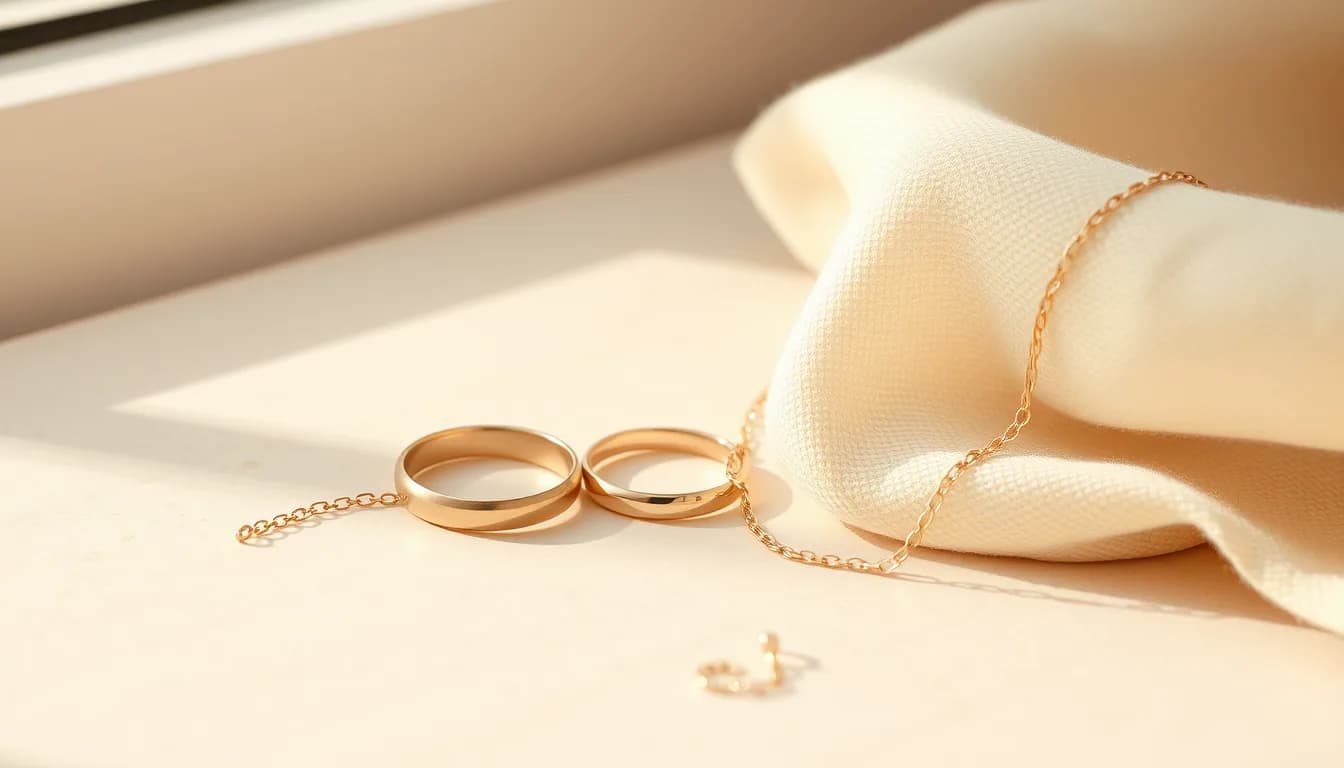
Rose gold is real gold alloyed with copper, which gives it the pink color. 14K rose gold is 58.5% gold and 18K is 75%, so its gold value per gram matches yellow gold of the same karat: about {{k14_g}} per gram for 14K and {{k18_g}} for 18K at melt.
Rose gold is real gold mixed with copper, plus a little silver. The copper makes the pink color. The karat stamp, not the color, sets how much gold is inside and what the piece is worth when you sell it.
That matters whether you're buying an engagement ring, wondering if a thrift-store bracelet is real, or deciding where to sell an old rose gold chain. This guide covers what rose gold is made of, how it compares to yellow and white gold, how to tell solid from plated, and how to work out what a piece is worth before you pay or get paid.
What rose gold actually is
Pure gold (24K) is soft and bright yellow. Jewelers mix it with other metals, called an alloy, to make it harder and change the color:
- Yellow gold uses a mix of silver and copper.
- White gold uses palladium or nickel and is usually rhodium-plated. Our white gold guide covers it in detail.
- Rose gold uses mostly copper, with a little silver to soften the shade.
More copper gives a redder color. You'll see it sold as rose gold, pink gold or red gold. These are marketing names for points on the same scale, and there's no legal definition separating them. In the 1800s it was popular enough in Russia to be nicknamed "Russian gold."
What's inside 14K and 18K rose gold
The gold percentage is fixed by the karat. The copper and silver mix varies by manufacturer, which is why two brands' "rose gold" can look slightly different side by side.
| Karat | Gold content | Typical rest of alloy | Color | Stamp you'll see |
|---|---|---|---|---|
| 22K rose | 91.67% | Copper, a little silver | Soft, warm peach (uncommon in US) | 22K, 916 |
| 18K red | 75% | ~25% copper | Deep coppery red | 18K, 750 |
| 18K rose | 75% | ~22% copper, ~3% silver | Classic rose | 18K, 750 |
| 18K pink | 75% | ~20% copper, ~5% silver | Lighter pink | 18K, 750 |
| 14K rose | 58.5% | Mostly copper, some silver (often zinc) | Stronger pink | 14K, 585 |
| 10K rose | 41.7% | Mostly copper | Pinkest and reddest | 10K, 417 |
The non-gold metals in 18K figures are approximate. Recipes differ by maker. One counterintuitive point: lower karat rose gold usually looks pinker because there's more room in the alloy for copper. If you want that strong blush color, 14K often delivers it better than 18K.
Rose gold vs. yellow gold vs. white gold
| Rose gold | Yellow gold | White gold | |
|---|---|---|---|
| Main alloy metal | Copper | Silver and copper | Palladium or nickel |
| Durability (same karat) | Harder, resists scratches well | Softer | Hard, but plating wears |
| Upkeep | Low, no plating to redo | Low | Rhodium re-plating every 1–3 years for many pieces |
| Allergy concerns | Copper sensitivity (rare) | Rarely an issue | Nickel allergy is common if it contains nickel |
| Melt value (same karat, same weight) | Same | Same | Same |
The GIA notes that copper makes rose gold stronger than yellow gold of the same karat. Some jewelers find copper-heavy alloys a little fussier to size or repair, so ask before you buy whether the shop works with rose gold in-house.
Allergies: Most rose gold is nickel-free, which makes it a reasonable pick for people who react to nickel white gold. Copper allergy exists but is uncommon. If you've reacted to cheap copper bracelets, consider 18K, which has less copper than 14K or 10K.
Does rose gold tarnish?
Solid rose gold doesn't rust or flake. Over years, the copper can deepen the color slightly, giving it a warmer, slightly darker tone. Some people like that vintage look. This change is more noticeable in 10K than 18K.
What does fade fast is rose gold plating. If your "rose gold" ring turned silver or brassy within months, it was plated, not solid.
To care for solid rose gold:
- Wash it in warm water with a drop of dish soap and use a soft brush.
- Keep chlorine and harsh cleaners away from it. Pools and bleach are rough on all gold alloys.
- A jeweler's polishing cloth brings back the shine.
Solid, filled, vermeil or plated: know what you're paying for
This is where buyers get burned. Under the FTC's Jewelry Guides, anything sold as "gold" in the US must be at least 10K. Lesser products have their own labels:
| Label | What it means | Gold value when you sell |
|---|---|---|
| 14K / 18K / 585 / 750 | Solid gold through and through | Full melt value of its gold content |
| Gold-filled (e.g. "1/20 14K GF") | A thick gold layer bonded to base metal, about 5% of the weight | Small, and many buyers won't take it |
| Vermeil | Sterling silver with a gold layer of at least 2.5 microns | Mostly silver value |
| Gold-plated / electroplate (GEP, RGP) | A very thin gold layer over base metal | Essentially zero |
| "Rose gold tone" / "rose gold color" | No gold at all, just a color | Zero |
Phones, watches and laptops in "rose gold" are almost always aluminum or steel in a pink finish. It's a color name, not a metal.
Quick checks on a piece you already own:
- Look for a stamp inside the band or near the clasp: 10K, 14K, 18K, 417, 585 or 750. A loupe or your phone camera's zoom helps.
- A magnet that grabs the piece hard means base metal. No pull doesn't prove it's gold, though.
- Look for wear spots on edges and clasps. Silver or yellow-brass showing through means plating.
- For a definitive answer, have a jeweler or gold buyer do an acid or XRF test. It's usually free.
What rose gold is worth
Rose gold's gold value per gram is identical to yellow or white gold of the same karat. The copper adds essentially nothing. To estimate melt value, multiply the weight in grams by today's rate for its karat:
- 10K: $52.35 per gram
- 14K: $73.44 per gram (14K price per gram)
- 18K: $94.15 per gram (18K price per gram)
These figures move with the gold price today. Here are worked examples:
- A 4-gram 14K rose gold band has about 4 × $73.44 in gold.
- An 8-gram 18K rose gold bracelet has about 8 × $94.15 in gold.
If your jeweler or buyer weighs in pennyweight, use $114.21 per dwt for 14K and $146.42 for 18K. The scrap gold calculator does the math for any karat and unit.
Melt value is the ceiling for what a buyer pays. It isn't what a jewelry store charges. Retail rose gold jewelry usually sells for well above melt because design, labor, stones, brand and store overhead are baked in. That's normal. Just know that resale is based on the gold, not the price tag.
Buying rose gold: a checklist
The top results for "rose gold" are store pages. Before you click "add to cart," run through this:
- Confirm it's solid. The listing should say "14K solid rose gold" or "18K rose gold," not "rose gold plated," "tone" or "finish."
- Pick your karat on purpose. Choose 14K for durability, a pinker color and a lower price. Choose 18K for more gold, a softer pink and less copper against the skin.
- Ask for the gold weight in grams. Multiply it by the per-gram rate above. This shows how much of the price is metal and how much is design and markup. It's useful for comparing two similar rings.
- Match your sets. If you're pairing an engagement ring and a wedding band, buy from the same maker or compare them in person. Rose shades vary between brands.
- Check resizing and repair policies. Ask whether the shop can size rose gold without color mismatch at the solder seam.
- Know the return window. Thirty days is common online. Look at the color in daylight before it closes.
- Stones are priced separately. Diamond or gemstone value is its own question. The gold math covers only the metal.
Selling rose gold: how to get a fair price
Rose gold sells exactly like yellow gold of the same karat. A good buyer shouldn't knock the price down because it's pink. Payouts depend on who you sell to:
| Buyer type | Typical payout (% of melt value) |
|---|---|
| Refiners and large mail-in refiners | 85–95% |
| Local gold buyers and coin/bullion shops | 75–90% |
| Jewelers | 70–85% |
| Pawn shops | 60–80% |
| Gold parties and mall kiosks | 30–60% |
Here's what to do:
- Sort by karat so 10K, 14K and 18K are weighed separately. Mixed piles get paid at the lowest karat.
- Weigh it yourself on a kitchen scale in grams and calculate melt before you walk in.
- Get two or three quotes. Ask each buyer for the weight, karat and percentage they're paying.
- Pull out stones worth keeping, or ask whether they're being valued at all. Usually they aren't.
For the full walkthrough, see how to sell gold and what pawn shops pay.
The bottom line
Rose gold is real gold with copper added for its pink color and extra hardness. The karat stamp decides its value. 14K rose gold is 58.5% gold and 18K is 75%, the same as yellow gold. When buying, confirm it's solid, ask for the gram weight, and pick 14K or 18K based on color and wear. When selling, sort by karat, know your melt value at $73.44 or $94.15 per gram, and don't accept less because it's rose.
Sources
Frequently asked questions
Is rose gold real gold?
Yes, if it's stamped 10K, 14K, 18K (or 417, 585, 750). It's gold alloyed with copper and a bit of silver. Items labeled "rose gold tone" or "rose gold plated" contain little or no gold.
Is rose gold worth less than yellow gold?
No. At the same karat and weight, rose, yellow and white gold contain the same amount of gold. 14K of any color melts at about {{k14_g}} per gram.
Does rose gold tarnish or fade?
Solid rose gold doesn't flake or fade. The copper can deepen the color slightly over many years, especially in 10K. Rose gold plating, by contrast, can wear off within months.
Is 14K or 18K rose gold better?
14K is harder, cheaper and usually pinker because it holds more copper. 18K has more gold, a softer pink tone and less copper against the skin. The right choice depends on your budget, preferred color and how hard you are on jewelry.
Can I wear rose gold if I'm allergic to nickel?
Usually yes, since most rose gold alloys are nickel-free. Confirm with the seller, and if you're sensitive to copper, 18K is the gentler option.
Get the gold brief
Gold's move and the reason behind it, in your inbox every US trading morning. Free, two minutes to read, unsubscribe anytime.
 AIJake · AI buying & selling guideJake is one of GoldTrack USA's AI writers. Figures are checked automatically against live market data, and sources are listed above. Not financial advice.

