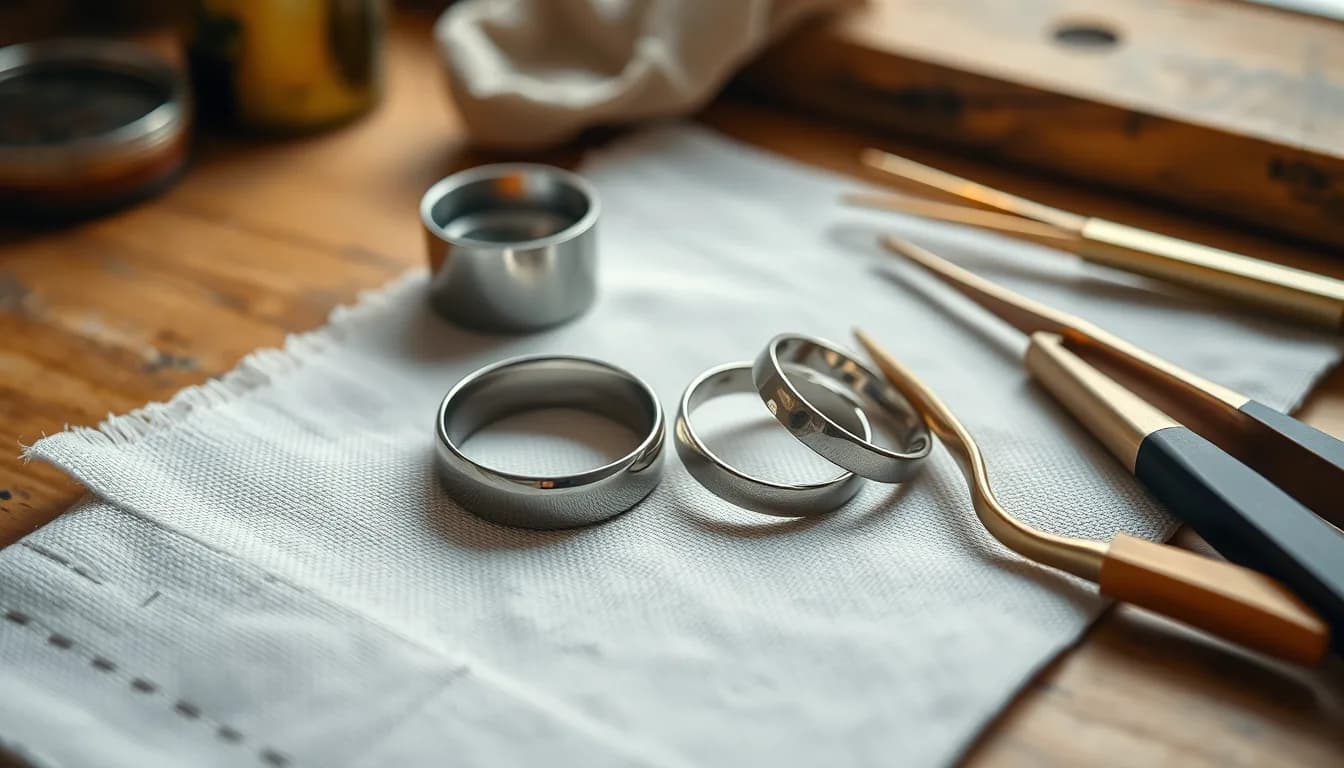
A platinum ring is usually 90–95% pure, naturally white and roughly 50–60% heavier than the same ring in 14K gold, so it typically costs more up front. Check for a PT950 or PLAT hallmark, ask for the weight in grams and compare the price to its melt value (grams × 0.95 × {{platinum_oz}} ÷ 31.1035).
A platinum ring is the heavyweight of fine jewelry, both literally and on the price tag. Before you click "add to cart," here's how to tell what you're actually paying for, whether platinum is worth it over white gold, and how to avoid the common traps.
What a platinum ring actually is
Jewelry platinum is never 100% platinum. It's alloyed with a small amount of another metal, usually ruthenium, iridium or cobalt, to make it workable. The common US grades:
- 950 platinum (PT950, "PLAT"): 95% platinum. This is the standard for quality rings in the US.
- 900 platinum (PT900): 90% platinum. Common in Japanese-made and older pieces. It's slightly harder and still excellent.
- 850 platinum: 85% platinum. Less common, but legitimate.
- 585 platinum and other low-content alloys: These are about 58.5% platinum, often mixed with cobalt or copper. They're cheaper, but they don't behave the same as 950.
Under the FTC's Jewelry Guides, a ring can be marked simply "Platinum" or "Plat" only if it's at least 950 parts per thousand platinum. Lower grades must show the number, as in "900 Plat" or "850 Plat." Low-content alloys need a fuller disclosure of what's in them. If a listing just says "platinum finish" or "platinum-plated," that's a coating over another metal. It is not a platinum ring.
Platinum vs. white gold: the honest comparison
This is the decision most shoppers are really making. Both look silvery-white, but they age differently.
| Feature | 950 Platinum | 14K White Gold | 18K White Gold |
|---|---|---|---|
| Precious metal content | 95% platinum | 58.5% gold | 75% gold |
| Weight (same design) | Heaviest, about 1.6× 14K | Baseline | About 1.2× 14K |
| Natural color | White-gray, stays white | Slightly yellowish under plating | Slightly yellowish under plating |
| Rhodium plating needed? | No | Yes, typically every 1–3 years | Yes, typically every 1–3 years |
| How it wears | Scratches into a soft satin "patina"; metal moves rather than wears away | Scratches polish out, but metal slowly wears away | Same as 14K, slightly softer |
| Hypoallergenic | Very (watch cobalt alloys if sensitive) | Nickel alloys can irritate | Usually palladium or nickel alloy |
| Typical retail price | Highest | Lowest | Middle |
| Resizing | Harder and pricier | Easy | Easy |
The trade-off in one sentence: platinum costs more on day one and almost nothing to keep white, while white gold costs less on day one but needs a plating touch-up (often $40–$100) every year or few.
For a deeper look at the gold side, see our white gold guide and the live white gold price per gram.
About that "patina"
Platinum doesn't stay mirror-bright. Within months, everyday knocks give it a soft, satin-like haze. Some people love it, and it's part of why platinum is considered an heirloom metal. Others hate it. A jeweler can re-polish it whenever you like. The good news is that when platinum scratches, the metal mostly gets pushed aside instead of lost. That's why platinum prongs are prized for holding diamonds securely over decades.
What a platinum ring should cost
Retail prices on the big sites are all over the map. Plain women's bands run from under $600 to over $2,000. Men's bands are often $1,500–$2,500, and diamond rings range far higher. Almost all of that spread is labor, design, brand and stones. The metal itself is only part of it.
The smartest thing you can do is compare the price to the metal's melt value. Here's how:
- Ask for the weight in grams. Good sellers list it or will tell you. If they won't, that's a yellow flag.
- Get today's platinum price. Check the live platinum spot price, currently $1,452.00 per troy ounce, or our platinum price per gram page.
- Do the math: grams × 0.95 (for 950) × ($1,452.00 ÷ 31.1035).
Worked example: A 6mm men's comfort-fit band weighing 12 grams of PT950 contains about 12 × 0.95 = 11.4 grams of pure platinum. That's 11.4 × ($1,452.00 ÷ 31.1035) in metal value.
If a plain band is priced at five or six times its melt value, you're paying mostly for brand. That can be fine, but now you know. Simple bands from reputable online makers are often priced at a much smaller multiple.
Typical weights to sanity-check a listing
| Ring style | Approximate weight in PT950 |
|---|---|
| Thin women's band (1.5–2mm) | 2–4 g |
| Classic women's band (3mm) | 4–6 g |
| Solitaire engagement setting (no stone) | 3–6 g |
| Men's band (5–6mm comfort fit) | 9–14 g |
| Men's heavy band (8mm) | 15–22 g |
These are rough figures. Width, thickness, ring size and profile all change the number. A "6mm band" that weighs 6 grams is thin-walled and will bend or wear faster than a heavier one.
Why platinum costs more than its spot price suggests
Platinum has at times traded below gold per ounce, yet platinum rings still usually cost more than gold ones. Three reasons:
- Density. Platinum is about 21.4 g/cm³, so the same ring uses far more metal by weight.
- Purity. You're getting 95% precious metal, compared with 58.5% in 14K.
- Labor. Platinum melts at a much higher temperature and is harder to cast, polish and set, so bench time costs more.
For context on how gold karats compare, see the live 14K gold price per gram.
Buying checklist: before you pay
Run through these before any purchase, online or in a store:
- Hallmark: Look for PT950, 950 PT, PLAT or PT900 inside the band. A maker's mark next to it is a good sign.
- Written alloy: Ask what the other 5% is. Platinum-ruthenium is a common, tough choice. Platinum-cobalt casts beautifully but is slightly magnetic, so a weak magnet tug on a cobalt alloy doesn't mean it's fake.
- Weight in grams: This is your melt-value check, and a quick way to compare two "identical" rings.
- Return window: Thirty days is standard at the big online sellers. Don't settle for less on a ring you've never tried on.
- Resizing policy: Platinum resizing is pricier. Free first resize within 30–60 days is worth a lot.
- Comfort fit vs. standard: Comfort-fit bands are rounded inside, use more metal, cost more, and fit about a quarter to half size looser.
- Stone settings: On a diamond ring, check that the prongs or head are platinum too, not white gold soldered on.
- Warranty: Ask what's covered (prong re-tipping, polishing) and for how long.
- Low-content alloys: If the price seems too good, check whether it's 585 platinum. It isn't a scam if it's disclosed, but it's a different product.
How to tell if a ring is real platinum
If you're buying used, at a pawn shop or estate sale, or inherited something unmarked:
- Read the stamp with a loupe or your phone's zoom. PT950, PLAT, IRID PLAT (an older platinum-iridium mark) and 900 PT are all good signs. "PT" alone on cheap jewelry can sometimes mean "plated," so context matters.
- Feel the weight. Platinum feels noticeably heavy for its size compared with silver or gold.
- Look for wear-through. Yellow or copper color showing at worn spots means it's plated.
- Get it tested. A jeweler or gold buyer can do an acid or XRF test in minutes, often free. XRF is non-destructive and the most reliable.
Caring for a platinum ring
- Clean it with warm water, mild dish soap and a soft toothbrush.
- Have a jeweler check prongs once a year if it holds stones.
- Re-polish only when you want the shine back. Each polish is light, and platinum loses very little metal.
- Take it off for heavy gym work or yard work. Platinum is tough, but it can dent and scratch.
- Store it apart from diamonds and other rings, because diamonds will scratch it.
What a platinum ring is worth if you sell it
This is where expectations need adjusting. A used platinum ring is usually worth its metal value minus the buyer's cut, plus something for stones and brand if they're notable. That's far below what you paid at retail.
Fewer local shops buy platinum than buy gold. Some pay a smaller share of melt value than they would for gold, because platinum is costlier for them to refine. To get a fair number:
- Know your melt value using the formula above before you walk in.
- Get at least three quotes. Refiners, mail-in buyers and coin shops tend to beat jewelers and pawn shops.
- Sell diamonds separately or ask for an itemized quote, since some buyers pay only for metal.
- Expect brand-name rings (Tiffany, Cartier) to fetch more from resellers than from scrap buyers.
Our how to sell gold guide walks through the same steps, and they apply to platinum too. If you have mixed karat gold in the drawer as well, run it through the scrap gold calculator.
Is platinum the right choice for you?
Platinum tends to make sense if you:
- Want a ring that stays white without maintenance
- Have sensitive skin or a nickel allergy
- Are setting a valuable diamond and want the most secure prongs
- Like a substantial, heavy feel
White gold or palladium may make more sense if you:
- Want the lowest up-front price
- Like a bright, mirror finish and don't mind replating
- Expect to resize often (growing hands, pregnancy, etc.)
Neither choice is wrong. You're trading higher cost now for lower upkeep later.
The bottom line
A real platinum ring is usually PT950, naturally white, very durable and heavier than gold. That's why it costs more. Before buying, find the hallmark, get the weight in grams, and multiply grams × 0.95 × ($1,452.00 ÷ 31.1035) to see the metal value. Then decide how much brand and design premium you're comfortable paying on top. Check the return and resizing policies, and you'll buy with your eyes open.
Sources
Frequently asked questions
Is a platinum ring better than white gold?
Platinum is purer, heavier, hypoallergenic and stays white without rhodium plating, but it costs more and develops a satin patina. White gold is cheaper up front but needs replating every year or few.
How much is a platinum ring worth in metal?
Multiply its weight in grams by 0.95 (for PT950), then by today's platinum price per gram ({{platinum_oz}} ÷ 31.1035). Buyers typically pay somewhat less than that full melt value.
What does PT950 mean on a ring?
PT950 means the ring is 95% pure platinum, the US standard for fine platinum jewelry. Under FTC guidelines, only 950 or higher can be marked simply "Platinum" or "Plat."
Do platinum rings scratch?
Yes. Platinum scratches into a soft satin finish, but the metal mostly shifts rather than wears away. A jeweler can re-polish it to a high shine whenever you want.
Can a platinum ring be resized?
Yes, but it's harder and usually costs more than resizing gold because platinum needs higher heat and specialized tools. Many online sellers include one free resize within the first 30–60 days.
Is a platinum ring magnetic?
Pure and platinum-ruthenium or platinum-iridium rings aren't magnetic, but platinum-cobalt alloys can be slightly magnetic. A weak pull isn't proof of a fake, so use a hallmark check or an XRF test instead.
Get the gold brief
Gold's move and the reason behind it, in your inbox every US trading morning. Free, two minutes to read, unsubscribe anytime.
 AIJake · AI buying & selling guideJake is one of GoldTrack USA's AI writers. Figures are checked automatically against live market data, and sources are listed above. Not financial advice.

